

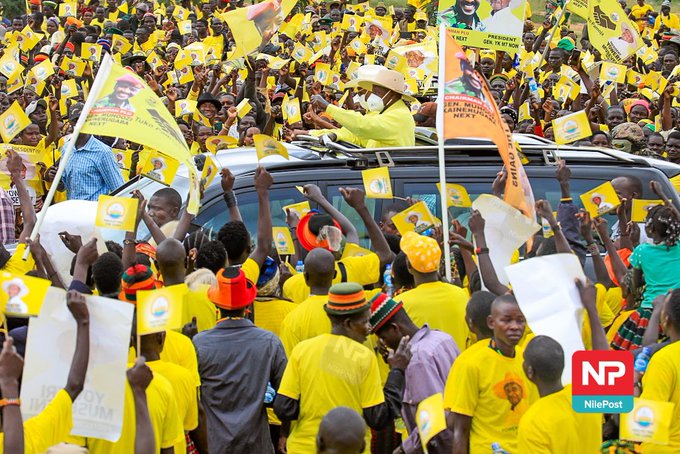
The first month of presidential campaigns ahead of Uganda’s 2026 general elections has unfolded with an unusually subdued atmosphere, raising concern among political observers about declining public interest in the country’s democratic process.
Unlike in previous election cycles—when rallies, slogans, and crowds dominated the political landscape by this stage—this year’s campaigns have been markedly quiet, with minimal activity and limited excitement nationwide.
Two-time former presidential candidate Muhammad Kibirige Mayanja, who contested in 1996 and 2001, attributes the low energy to the violent nature of past elections and the absence of a clear political transition.
“People have lost hope because of the bloodshed that has characterized past elections and the lack of any real transition in leadership,” Mayanja said. “This has created deep apathy among voters who no longer see meaning in participating.”
Governance analyst Sarah Bireete and Perry Aritua, Executive Director of the Women’s Democracy Network Uganda Chapter, agree that the waning enthusiasm reflects both mistrust in the electoral system and the repetitive nature of Uganda’s politics.
“When people believe the outcome is already predetermined, they withdraw,” said Bireete. “This affects participation not only in campaigns but also in voting.”
According to Aritua, the lack of new contenders in the presidential race has also deepened voter fatigue.
“For nearly four decades, Ugandans have seen the same faces competing for the top office,” she said. “This, combined with declining trust in the electoral process, has reduced public interest in the campaigns.”
The analysts further linked low participation to limited civic education and ongoing political injustices that have alienated citizens from national processes.
“Many people do not even understand the power of their vote because civic education is poorly funded and inconsistently implemented,” Bireete noted.
Aritua added that, “Without addressing the structural injustices in the electoral process, voter participation will continue to decline.”
Both Bireete and Aritua called for deliberate and inclusive reforms to restore confidence and enthusiasm among Ugandans ahead of the 2026 polls.
“We need deliberate action to rebuild trust and make elections meaningful again. We should engage in transition, reinstatement of term and age limits, among other reforms,” said Bireete.
“If nothing changes, Ugandans will continue to shun future elections. However, new faces with new ideas will also help reinstate the interest of Ugandans in our elections,” Aritua warned.
